App Notifications Fueling Rapid Responses in Football and Horse Racing Betting Dynamics
Written by Greta Perry · Jul 10, 2026
App Notifications Fueling Rapid Responses in Football and Horse Racing Betting Dynamics
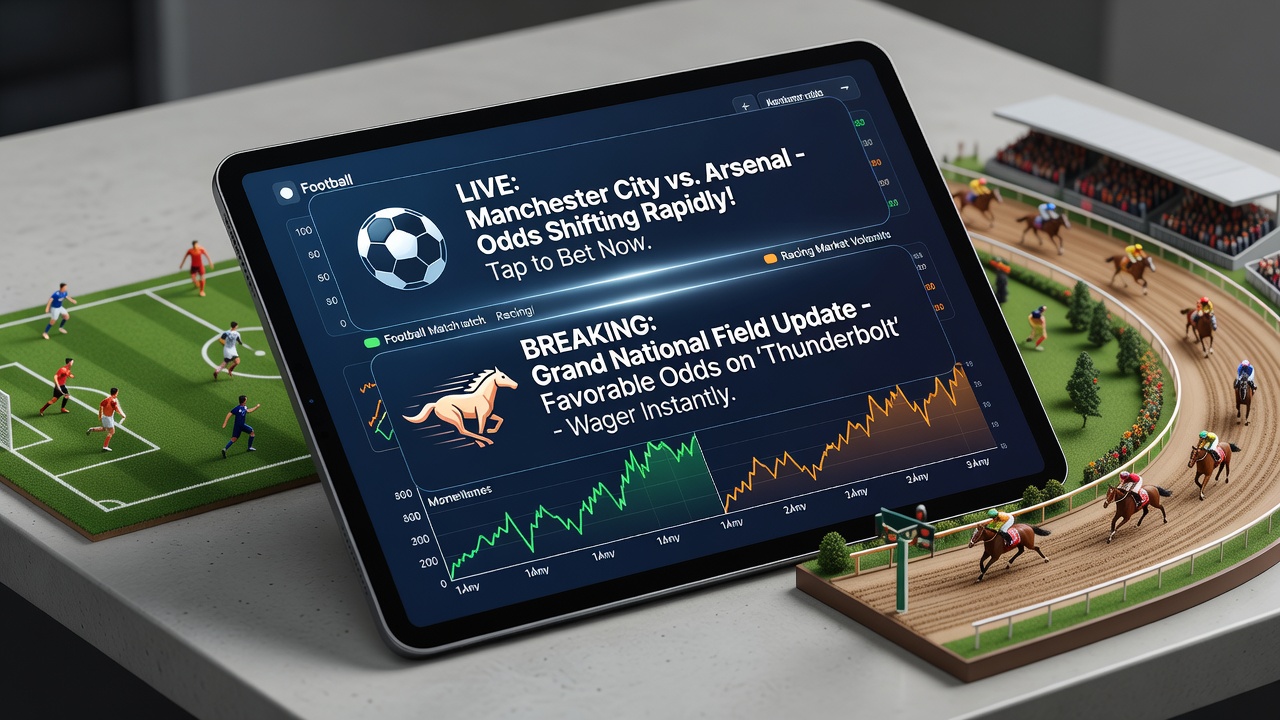
App notifications have emerged as key tools that connect bettors with shifting conditions in football and racing markets, allowing responses to live data streams without constant screen monitoring. These alerts deliver updates on odds fluctuations, match events, and race developments directly to mobile devices, which supports decisions during periods when markets move quickly. Observers note that such systems integrate with live feeds to highlight opportunities as they arise in both soccer matches and equine competitions.
Market Evolution in Live Football and Racing Environments
Football markets change rapidly once play begins because goals, substitutions, and disciplinary actions alter probabilities within seconds, and notifications flag these adjustments by pushing revised odds to users who have set specific triggers. Racing markets follow a parallel pattern where pre-race adjustments for track conditions or participant withdrawals occur, followed by in-race updates that reflect pace and positioning data, so alerts can prompt wagers on remaining outcomes while the event unfolds. Data from industry analyses show that these real-time shifts create windows measured in seconds rather than minutes, and mobile systems address that constraint by delivering concise summaries rather than requiring full app navigation.
Notification Types and Their Integration with Betting Platforms
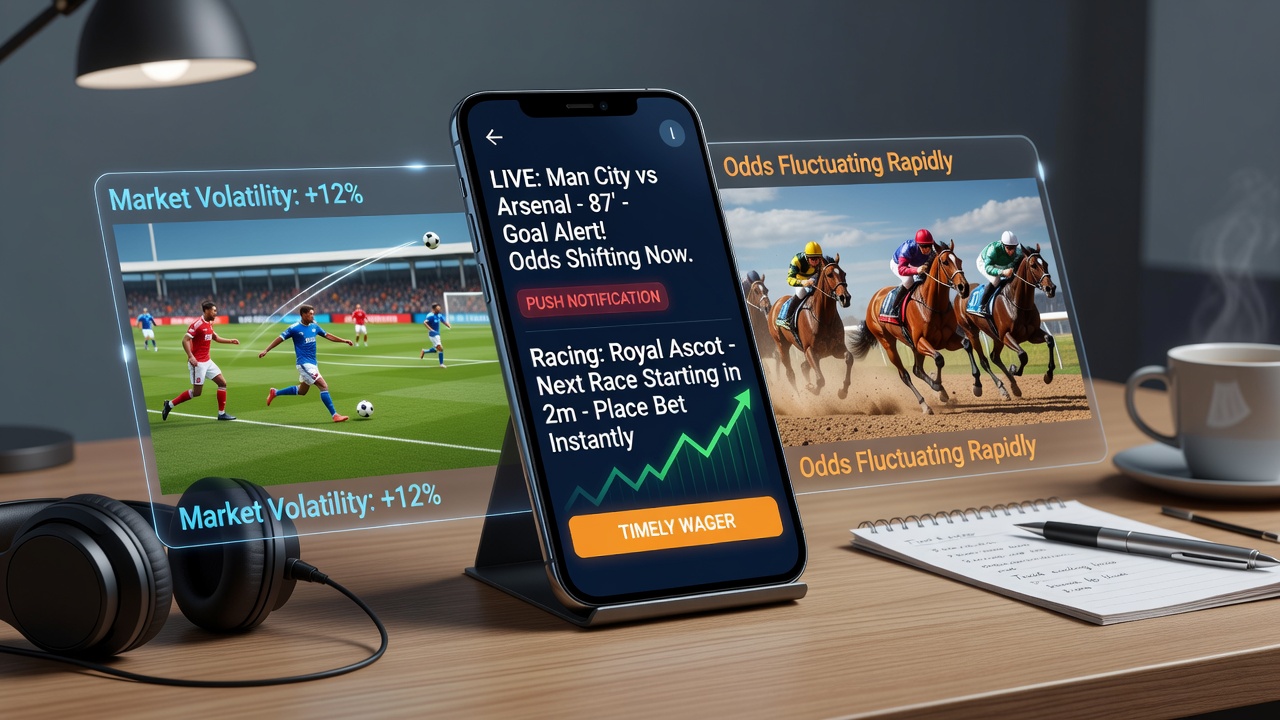
Platforms categorize alerts into event-based triggers such as goal notifications paired with updated goalscorer markets, and odds-movement warnings that activate when spreads exceed user-defined thresholds. Racing equivalents include alerts for final declarations and pace indicators that link directly to place or exotic wager options. Those who configure these features report streamlined access to evolving lines, and the architecture often combines push services with backend APIs that pull from official data providers. In July 2026, several operators expanded notification granularity to include layered filters that distinguish between major and minor market movements, which reduced alert volume while preserving coverage of high-impact changes.
Integration extends to multi-market setups where a single football notification can reference both match-winner and total-goals lines simultaneously, and similar bundling appears in racing when a notification covers both win and place markets for the same runner. This approach allows bettors to evaluate correlated opportunities without separate checks, and studies from research institutions indicate that coordinated alerts correlate with higher engagement rates across live sessions.
Operational Mechanics Behind Timely Wager Placement
Backend systems monitor official feeds continuously and apply algorithmic thresholds before dispatching alerts, which ensures notifications reach devices within tight timeframes measured in under two seconds for most major events. Users receive options to place wagers directly from the alert interface, bypassing main menus and reducing steps between awareness and action. Those configurations prove especially relevant during condensed schedules such as evening football fixtures overlapping with twilight racing cards, where attention must divide across simultaneous developments. Figures released by the New Jersey Division of Gaming Enforcement reveal steady growth in mobile-initiated wagers during overlapping live periods, underscoring the practical value of streamlined alert pathways.
Regional Approaches and Data Patterns
Different jurisdictions apply varying standards to notification delivery and data transparency, yet common threads appear in how operators balance user customization with responsible gaming parameters. European operators, for instance, often include mandatory pause options within alert settings, while Australian frameworks emphasize clear disclosure of market sources that feed the alerts. A report from the Australian Institute of Criminology examined patterns in mobile betting activity and found that structured notification use aligned with more consistent session lengths rather than extended monitoring periods. These findings suggest that targeted alerts help users maintain defined engagement boundaries while still accessing time-sensitive market information.
Cross-market examples further illustrate the pattern: a notification about an early goal in a premier league match can link to adjusted half-time lines, and a comparable alert in a thoroughbred race can connect to updated each-way markets once the field settles into stride. Observers have documented instances where these linkages allow sequential wagers across unrelated events without requiring constant manual refresh, and the underlying technology continues to refine latency and personalization based on historical user behavior data.
Conclusion
App notifications function as connectors between live data flows and betting interfaces in football and racing markets, delivering focused updates that support decisions within narrow timeframes. Their design accommodates the distinct dynamics of each sport while maintaining compatibility with platform-level controls, and ongoing refinements in July 2026 and beyond continue to shape how these systems operate across different regulatory landscapes. The result remains a structured channel for accessing evolving odds and event information without requiring uninterrupted screen presence.