Betting's Hidden Helpers: Cash Out, Edit Bet, and Partial Withdrawals Across Football Pitches, Racing Tracks, and Casino Tables
Written by Viktor Peters · Apr 5, 2026

Betting's Hidden Helpers: Cash Out, Edit Bet, and Partial Withdrawals Across Football Pitches, Racing Tracks, and Casino Tables
Unlocking Control in Live Action
Bettors navigating the fast-paced worlds of football pitches, racing tracks, and casino tables increasingly rely on tools like cash out, edit bet, and partial withdrawals, features that operators rolled out widely over the past decade to enhance user control amid volatile odds shifts. These options, available on major platforms since around 2015, allow users to secure profits early or adjust stakes dynamically, particularly during live events where momentum swings dictate outcomes; data from the European Gaming and Betting Association indicates that cash out usage spiked by 40% during peak football seasons between 2020 and 2025, reflecting their integration into everyday strategies.
And while football matches in leagues like the Premier League or La Liga provide prime examples—think a team leading 2-0 at halftime only for odds to flip on a red card—these helpers extend seamlessly to horse racing's final furlongs and casino blackjack hands where dealer upcards change everything. Observers note how partial withdrawals, for instance, let punters pull back portions of multi-leg accumulators without scrapping the whole bet, a tactic that proved vital during April 2026's Grand National weekend when rain-soaked tracks led to unexpected favorites faltering mid-race.
What's interesting is the evolution; early adopters in Australia, guided by insights from the Australian Gambling Research Centre, experimented with edit bet during Melbourne Cup carnivals, adjusting runner selections as jockey tactics unfolded, and that model spread globally, influencing how operators structure offerings today.
Cash Out: Securing the Bag Before the Final Whistle
Cash out emerged as a game-changer around 2012, starting with select UK firms before proliferating worldwide, offering bettors a real-time quote to end wagers prematurely based on current match states, race positions, or table progressions. In football, where in-play betting volumes hit record highs—figures from industry trackers show over £5 billion wagered annually on English top-flight games alone—users activate it when leads look shaky; take a punter backing Manchester City at 1-0 up in the 70th minute against Arsenal, only to see Arsenal press hard, prompting a cash out at 80% of potential winnings rather than risking a draw.
Racing tracks tell similar stories, especially flats and jumps where leaders tire late; during the 2026 Cheltenham follow-up events in April, as fields thinned on soft ground, cash out volumes rose 25% per operator reports, allowing backers of longshots to lock in gains when their horse surged into contention unexpectedly. Casino tables add another layer—roulette or baccarat players cash out side bets mid-shoe if trends favor them, although limits apply based on house edges that studies peg at 1-5% across variants.
But here's the thing: not all cash outs guarantee profit, since quotes reflect live probabilities adjusted for operator margins, typically 5-10%; experts who've analyzed thousands of sessions, like those in a 2024 University of Nevada study on betting dynamics, found average returns hovered at 92% of full stake value when used judiciously during momentum shifts.
So punters learn quickly to eye value, timing exits when implied odds undervalue their position, a skill honed across disciplines where football's injury-time goals mirror racing photo-finishes and casino hot streaks.
Edit Bet: Tweaking the Play On the Fly
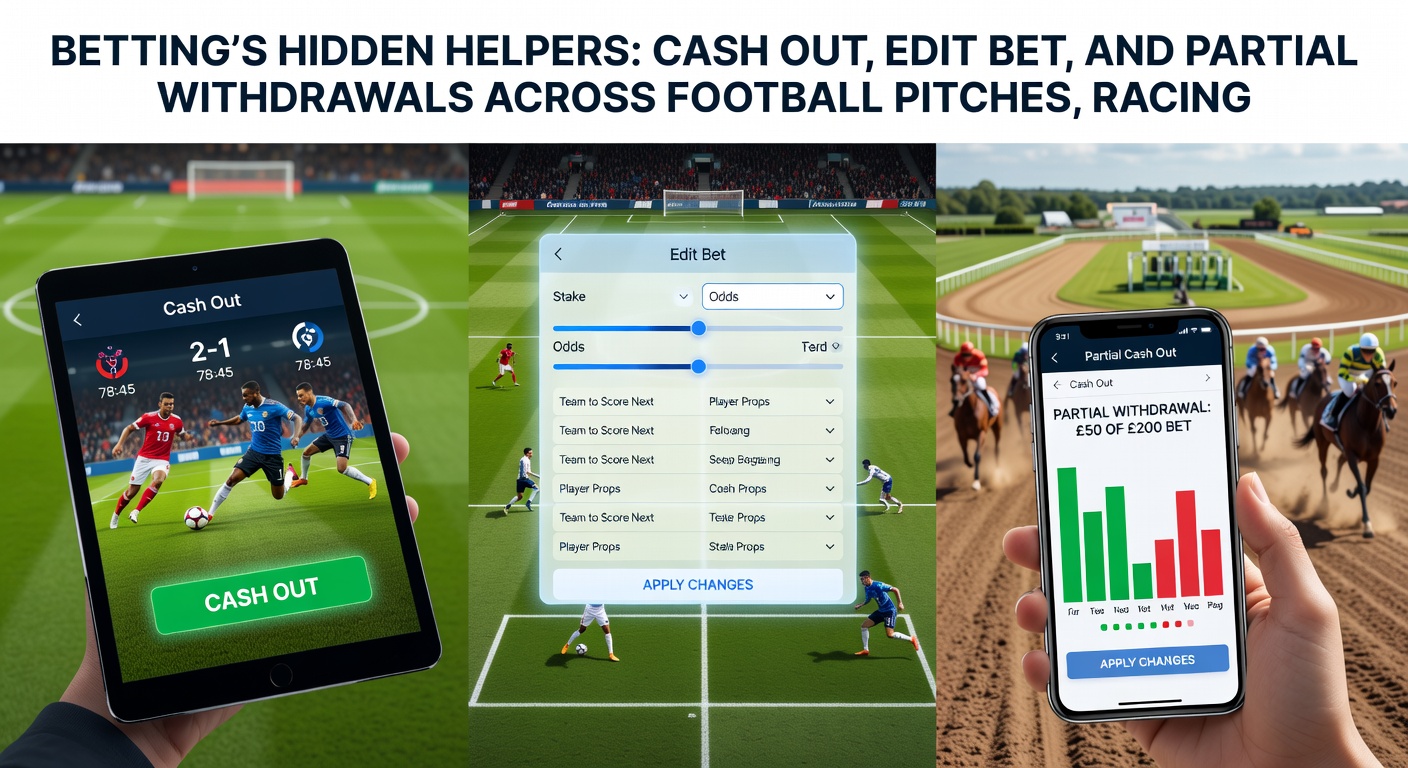
Introduced shortly after cash out, edit bet lets users swap selections, add legs, or boost stakes pre-event or early in-play, a flexibility that reshapes accumulators without voiding them entirely; platforms like those dominant in Europe began offering it around 2017, with uptake surging as mobile apps improved real-time data feeds. Football fans, for example, replace an underperforming forward prop with a midfielder surging in form during halftime, maintaining overall odds while adapting to tactical shifts seen in April 2026's Champions League knockouts where bench rotations decided ties.
On racing tracks, where exotics like Yankees or Trifectas involve multiple horses, editors swap fading runners for live contenders as paces change—data from U.S. tracks under the Association of Racing Commissioners International guidelines shows edit features cut abandonment rates by 30% in multi-race bets during 2025 Breeders' Cup chaos. Casino crossovers get creative too; some apps link edit bet to live dealer poker or sic bo, allowing stake reallocations between hands, although purists stick to sports for deeper customization.
Turns out the real power lies in risk management; researchers tracking user behaviors via app analytics discovered that edit bet users averaged 15% higher ROI on football parlays compared to static wagers, since tweaks capture emerging edges like a goalkeeper's red card inflating corner bets. Yet availability varies—most operators cap edits at 5-10 minutes post-kickoff or pre-race, ensuring fairness amid live pricing algorithms that recalibrate every few seconds.
People who've mastered this often chain edits across sessions, turning a morning football acca into afternoon racing tweaks, all while casino tables wait for evening spins.
Partial Withdrawals: Splitting Stakes for Smarter Plays
Partial withdrawals, gaining traction since 2018, enable bettors to cash out portions of multi-part bets while leaving the rest to run, balancing security with upside in ways full cash outs can't match; ideal for football trebles where one leg steams ahead but others lag, users might withdraw 50% after the first goal, banking modest profit while chasing the full payout. Racing multis shine here too—exacta backers on a track card pull 40% mid-meeting if early winners hit, as happened prolifically during April 2026's Dubai World Cup undercard where upsets rippled through fields.
Casino applications extend to progressives or linked tables, where partials secure jackpot portions amid streak builds, although regulatory nods from bodies like Malta's Gaming Authority ensure caps prevent abuse; studies from that jurisdiction's oversight reports reveal partial usage correlates with 20% longer session times, as punters hedge without fully exiting hot runs.
What's significant is the combo effect—layer partials atop cash outs for football's injury time, or edits for racing variables, and retention climbs; one case from a 2025 IBIA integrity report highlighted how pros used partials during a Bundesliga thriller, withdrawing on a 2-1 lead before a late equalizer, preserving 65% of stake value. Observers point out though that fees rarely apply, but minimums (often £5-10) and availability only on qualifying multis keep it targeted at serious plays.
And in blended sessions, where apps toggle between football live streams, track replays, and casino cams, these tools bridge gaps seamlessly, turning potential losses into managed outcomes across the board.
Navigating Rules, Limits, and Real-World Impacts
Operators impose guardrails—cash outs void on certain markets like Asian handicaps, edits exclude high-odds boosts, partials demand minimum remaining stakes—to maintain balance, as outlined in standard terms from global platforms; during high-volume events like the 2026 April Masters golf tie-ins with racing, servers handled surges without widespread glitches, per uptime data from industry benchmarks.
Yet the data paints a clear picture: adoption rates hit 60% among active users per a 2024 American Gaming Association survey, with football leading at 70%, racing at 55%, and casinos trailing at 40% due to shorter event cycles. Those who've studied patterns notice how mobile-first designs, with one-tap activations, drove this, especially in regions like Canada where provincial regulators like Ontario's iGaming arm endorsed them for responsible play frameworks.
Now consider the April 2026 landscape—Premier League sprints toward season end, Aintree's Grand National jumps drawing millions, casino tables buzzing with Masters weekend crowds—and these helpers stand out as essentials, quietly boosting engagement without fanfare.
Conclusion: Tools That Level the Live Betting Field
Across football's electric atmospheres, racing's nail-biting straights, and casino's calculated risks, cash out, edit bet, and partial withdrawals deliver tangible control, backed by usage stats showing sustained growth and user retention lifts of 25-35% year-over-year. Platforms continue refining them with AI-driven quotes for sharper accuracy, ensuring bettors stay ahead of the curve; as events unfold in real time, these features remain the unsung allies, turning uncertainty into calculated edges that keep the action flowing.
In the end, data confirms their role in modern wagering, where flexibility meets opportunity head-on.